
Essay
The town of Colchester suffered terribly during a catastrophic siege that occurred in 1648 towards the end of the British Civil Wars, characterised by a level of brutality and destruction unparalleled in any previous war in England. This article draws on Andy Wood’s description of the productive, eclectic ‘mess’ that is memory studies (Wood, 2013, p.23), and examines the changing memory in Colchester, noting how and why historical memory of the siege is problematic for the town, connecting with the more specific, emerging scholarship on memory and the Civil War in England.
The Siege of Colchester in 1648 was one of the most prolonged and brutal episodes of the war, affecting both soldier and civilian. Royalist risings in Kent and Essex culminated in the seizure of the Essex town on behalf of King Charles I. Colchester was besieged by the small but well-trained New Model Army under its commander Sir Thomas Fairfax, with the prolonged siege leading to the civilian population being forced to eat horses, dogs, cats and even rats. Starved out, the garrison surrendered and the two royalist commanders, Sir Charles Lucas and Sir George Lisle, were shot on Fairfax’s Council of War orders for their breach of parole. The town was then fined, with a large proportion of the fine falling upon the Dutch residents in Colchester. A contemporary account records that a ‘parliamentarian who rode into Colchester after its surrender found it “a very strange place”: it was “a sad spectacle to see many fair houses burnt to ashes & so many inhabitants made feeble and weak with living upon horseflesh & dogs, many glad to eat the very draught & graines for preservation of life” (Donagan 2004, p.314). Several contemporary accounts recorded what happened during the siege but one, written by an unknown parliamentarian and follower of Fairfax is remarkable because it is not simply a record of events. It is also a document of place; the diary included a map (The Siege of Colchester by the Lord Fairfax, British Library) a detailed account of fortifications and of military skirmishes during the siege. Indeed, the diary has been used to help with archaeological excavations (Map of Siege of Colchester, 1648, 2018) and to understand the siege works around the Colchester in recent times.
We know that the landscape continued to preserve the memory of the siege well into the eighteenth century because of topographical descriptions recorded by travel writers such as Daniel Defoe and Cecilia Fiennes. In 1727 Daniel Defoe wrote that Colchester, “still mourns, in the ruins of a civil war” (Defoe, “Letter 1, Part 1: Through Essex to Colchester”, Vision of Britain, 2017). For him, the scars from the siege were still very much evident, even when he was writing, eighty years after the siege. But because in so many ways the issues that divided people during the war continued to be played out in the politics of the eighteenth century and then re-formed into party political fights between Whigs and Tories in the nineteenth - these political divisions shaped how history was written and memory preserved.
The memory of the war was preserved into the eighteenth century largely in books although it is clear that the landscape still bore the marks of conflict and so presumably served as a constant reminder of the suffering and destruction inflicted on the town during the siege. Yet it is also clear that the political traditions and divisions that had grown up in the conflict continued to endure well into the eighteenth century. The Royalist party became the Tory party of the 1700s and the Parliamentary Party evolved into the Whigs. These divisions shaped the ways in which the siege was remembered in books. The eighteenth century marked the highpoint of the publication of urban histories as shown by scholars such as Rosemary Sweet, who has shown that town histories in this period served a variety of purposes whether to promote the town in a period of decline, or to highlight a key issue in their contemporary world that could be related back to the past (Sweet, 1997, p.3). Several authors wrote histories of Colchester in the eighteenth century and interestingly the siege is only mentioned quite briefly in most of these works. Perhaps, as Rosemary Sweet argues, the authors were conscious of the need to heal division and keen to brush over the enmities of the relatively recent past (Sweet, 1997, p.232). Furthermore, it is also tied to the fact that most of the eighteenth-century histories of Colchester were written by Tories. Philip Morant was the most famous of these scholars. When he wrote his history in 1748, he was also rector of St Mary at the Wall, a building badly damaged in the siege (St Mary at the Walls, 2018). Morant included details of damage, for example, he notes the amount of houses destroyed by the siege, “In St Mary’s at the walls, 5 burnt and ruined. In H. trinity, 32 burnt and destroyed. In St Martin’s 5 pulled down. In St James’s 28 burnt. In St Botolph’s 53 burnt and ruined. In St Giles’s 17 burnt” (Morant, 1748, p.68). He and other writers of Colchester’s history in this period, such as the antiquarian Tory Charles Grey focused mainly on the leaders of the Royalist forces Lucas and Lisle and their suffering at the hands of the Parliamentarian leader General Fairfax.
John Aikin, another Tory chronicler called Lucas and Lisle “gallant leaders” (Aikin, 1788, p.235). The Tory writer David Lloyd noted that when the Royalists surrendered, “Never did Roman with great courage, nor Christian with firmer confidence court grim death than did this matchless pair of heroes” (Lloyd, 1766, p.424). Arnaud M. Berquin (1788) was a Frenchman, writing in the midst of turbulent times in his own country and was known to write to target children and families. It shows how far reaching the execution of Lucas and Lisle went, if indeed it was a subject of discussion by French writers. When he wrote of the death of Lucas and Lisle, he used the word “murder”; Berquin wanted the viewer to note that the deaths were unjust. He laid the blame on one individual, Ireton, who was heavily involved in Fairfax’s Council of War, moving the focus away from Fairfax, writing that, “Lord Capel, who looked upon Ireton as the sole instigator of this barbarity” (Berquin, p.104). The history he presented focused on the lives of individuals as he used the past to show important character traits. Building on the image developed during the Restoration of Charles I as martyr king, Lucas and Lisle were represented as martyrs to the tyranny of Fairfax and the Parliamentarians. In the dominant strand of eighteenth-century memory, Parliamentarians appeared as the villains.
Sites such as St. Botolph’s Church and St. John’s Abbey represent important ways in which memory of the siege survived. Although it is possible to see a fragmentation of memory in either site, such as St. Botolph’s being a ruin as well as a burial ground, the Overseer’s accounts from 1757 indicate that the churchyard was under the authority of the local parish, and that they took responsibility for its maintenance. The gate was repaired in 1757 and the yard cleared in 1765 (Churchwardens Accounts from 1753-82, Essex Record Office). Therefore, in the eighteenth century, the site was still being used; this continued use suggests that the site of St. Botolph’s was still an important part of the local community. The fact that the churchyard is only mentioned suggested that there was a separation of memory and use. St. John’s Abbey had been divided into the Abbey, Gatehouse and Green. Their survival, in name and, in part, presence highlights the importance they had in local memory. The fragmentation of memory also meant that the sites saw communal use and ensured their importance in the local sphere.
These landmarks became sites of romanticism. In the late eighteenth century, a variety of different drawings showed the priory of St. Botolph, which was heavily damaged during the siege of Colchester, and whilst the reformation removed many of the priory’s buildings, the church remained and still functioned for the community. These tend to show people visiting the site which suggests that it was a popular place to visit. In each of these drawings the artists portray them in a picturesque scene, giving a sense of mystery to the site (1791 drawing of St. Botolph, Essex Record Office). These drawings show that the Civil Wars would have a huge impact in how landmarks were seen throughout the following century. Although the drawings do not indicate that it was the lure of the Civil War that would draw people to them, the fact that they were in ruin added a sense of mystery to them.
The nineteenth century was a time in which political identity was extremely important. The Tory John Horace Round, a local historian in Colchester, was a key figure in the preservation of the history of Colchester and wrote a number of books on the Siege of Colchester, including one specifically focused on the trial of Lucas and Lisle (Round, 1894). Round organised and commissioned a monument to Lucas and Lisle, supposedly built on the spot on which they were executed. Round wrote at a time of growing support for the Whigs/Liberals however and noted “there has been revived in various ways, within the last few years, an old subject of controversy, namely, the execution of Sir Charles Lucas and Sir George Lisle, in cold blood, on the surrender of Colchester to Fairfax in I648” (Round, p.157). Unsurprisingly, efforts started to be made in print to clear Fairfax’s name by supporters of the Whigs (who evolved into the Liberal party). Newspaper articles focused on the “indefensible conduct of the military defenders” (The Royal Archaeological Institute, Morning Post, 1876). Memory started to be contested during this time; Lucas and Lisle were no longer protected, and Fairfax became a more respectable figure in Colchester. Nonetheless, the strong Tory party in Colchester eventually cemented the memory of Lucas and Lisle with the building of the monument to them on the alleged site of their execution in 1892. The fact that the monument does not outright accuse Fairfax of anything does suggest that Round and Henry Laver (a local archaeologist and guide) felt that they could not get away with it. However, the monument suggests that they did indeed feel the memory was threatened, and their attempt helped solidify the memory of the martyrs in Colchester. Other landmarks were still there to provide markers of memory. For example, George Buckler, a local architect, took great pride in the fact that the castle survived the siege, proudly writing that “Its massive walls withstood all the storms of war and the fierce Siege of 1648. Most of the Castle Keeps were battered down by Cromwell’s armies, but this Castle survived” (Buckler, 1876-82, p. 5). Rev. E. L. Cutts, one of the founders of the local Archaeological Society, discussed the damage done to the town stating that “the street outside East Gate had been reduced to ruins; the churches of the town had suffered greatly; the fine Norman minister of St. Botolph had been reduced to the ruinous condition in which it still remains…St Mary’s had been so shattered that it had to be rebuilt” (Cutts, 1888, p.201). We can see that the Civil Wars impacted other histories and memories; Cutts made a specific mention of the “Norman minister”, lamenting the destruction caused, whilst Buckler rejoiced that the Norman castle survived the siege. The Civil Wars were written about in terms of how it affected previous memories and landmarks. This is important for historians as we try to see how memory of the conflict changed and developed over the centuries, and how these memories layered on each other.
Landmarks in the nineteenth century played an important role in the political life of the town. Visiting parties would often go and visit the sites of St. Botolph’s and St. John’s but also the tomb of Lucas and Lisle, as the Essex Herald showed in 1866, “they visited the ruins of St. Botolph’s Priory and St. John’s Abbey gate, passing St. Giles church, where lie buried the remains of the two knights, Lucas and Lisle” (“Printers’ Holiday Excursion to Colchester”, Essex Herald, Tuesday, 3rd July 1866). As already mentioned, the figures of Lucas and Lisle became a political statement in the nineteenth century, and thus tours that visited this site highlight its political importance. It was not just the Abbey and Priory which showed this, the Castle was reported as “ruined in the civil wars of the Commonwealth” (St. James Gazette, 1882). The political expressions would also appear by the tour guides themselves expressing their opinions, as can be found in the Chelmsford Chronicle (1894). Landmarks therefore became an important tool in keeping Civil War memory alive; it allowed people to engage with the topic and gave Colchester a very strong political identity.
Broadly speaking, by the twentieth century local and civic interest in remembering the siege seems to have declined. Most local history books focused more attention on the Roman and medieval aspects of Colchester (Denney, 2006; Jarvis, 1971; Jarvis, 1984; Jarvis, 1991). However, Phil Jones has published a popular history of the siege, which discussed the destruction in the landscape as well as the lives of individuals (Jones, 2003). There was also a play written by Roger Howard, which focused on the lives of individuals during the siege (Roger Howard, 1981). Andrew Phillips noted that the “siege and its aftermath left deep damage on the psyche of the town, ever visible in its ruined churches” (Phillips, 2004, p.61). Landmarks still hold a memory in modern Colchester and these shall be analysed to see how memory has been maintained in the present day.
The Castle had played a role in the Siege of Colchester, mainly as a prison for Lucas and Lisle, just before their execution. It became a museum in the middle of the nineteenth century, and came into public ownership at the beginning of the twentieth century with most of its exhibits focused on the Roman and Norman period and only a couple of glass cases filled with artefacts from the siege (Personal Observation, 2018). What should be noted is that the siege is the last exhibit before the shop, suggesting that history ended with the siege. At the castle we can see that the siege, although not prominent, is still a key part of Colchester’s history.
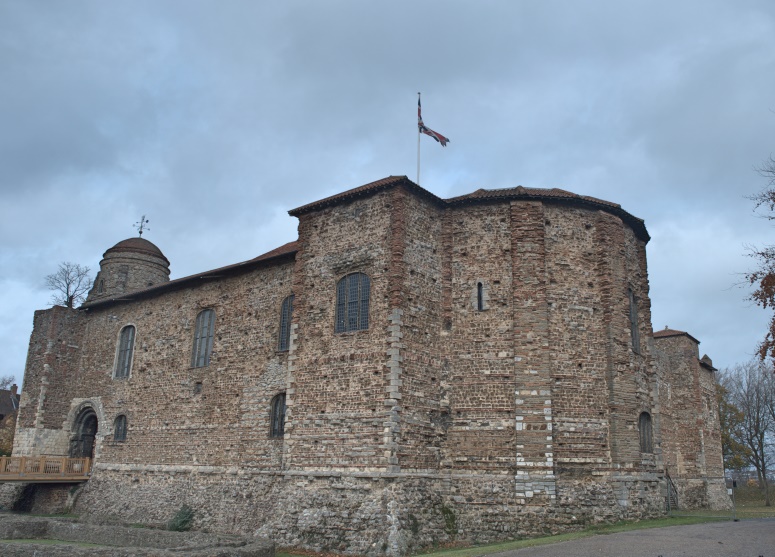
Figure 1: Colchester Castle (Picture: author’s own).
Interestingly, the Civil War display focuses on the landmarks around and on the execution of Lucas and Lisle. The damaged landmarks hold the memory of the siege, and show the victimisation of the town, as they are referenced in terms of suffering and damage caused by the cannons. There is also the focus on Lucas and Lisle, which shows the remembrance of Heroes and Villains. However, when using Lucas and Lisle they are often referred to when talking about the town’s suffering, with the lives of Lucas and Lisle coming to represent the town, rather than the old political identities that they represented in the nineteenth century. What can be noted from the exhibition is that these two memories do not look at the wider context of the Civil War or even conflict in general in regards to Colchester, concentrating only on the suffering of the people of the town in 1648.
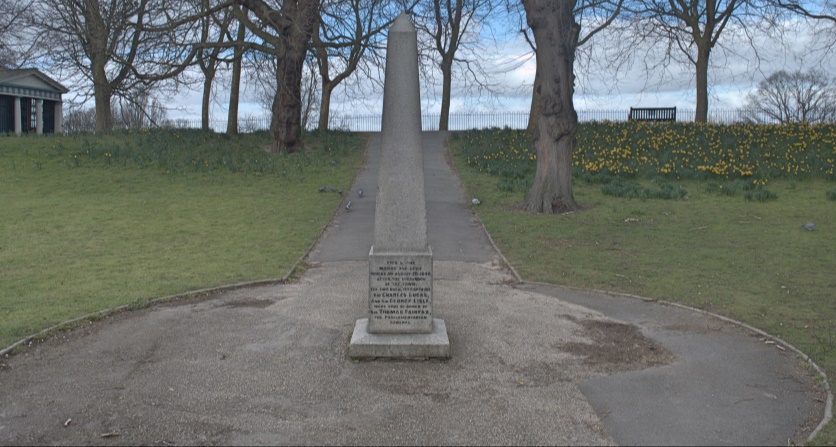
Figure 2: Monument to Lucas and Lisle outside the Castle (Picture: author’s own).
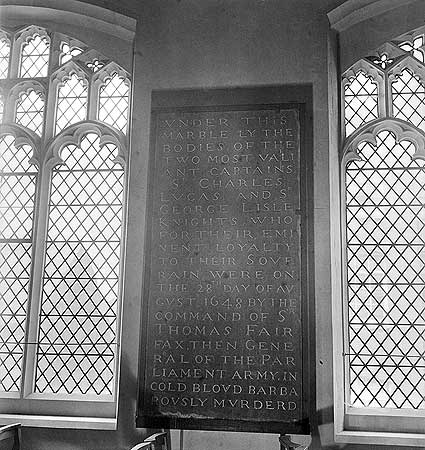
Figure 3: Inscription from Lucas and Lisle’s tomb at St. Giles church (Historic England, AA43/03523, 1943).
The Monument to Lucas and Lisle was built in 1892 by Henry Laver. Today, it still stands outside the castle, along with an information board stating the fact that two men were executed at the location. However, there is little context given to the event and there is little mention of the importance of the execution. Other man-made memorials, such as the tombs of Lucas and Lisle (1661) survive alongside a memorial to Sir William Campion (unknown date), a commander of the Royalist forces at the siege. These monuments continue the idea of a memory constructed around martyrs and villains. This Tory interpretation of the war, in terms of royalist martyrdom, has not been challenged or modified and was only strengthened in the nineteenth century (Memorials Part III, 2018). These monuments are the only sort of man-made commemoration of the siege. The text on the tomb of Lucas and Lisle for example describes their death as an injustice, for example declaring, “IN COLD BLOOD BARBAROUSLY MURDERED” (Round, 1984, p.174). The language offers an insight into the Restoration memory promoted by the state, showing heroes and villains. What is important to note is that there is no monument to commemorate the besieged or any of those who suffered during and after the conflict. The town has tried to alter the memory of Lucas and Lisle by making them symbols of the town’s suffering, as can be seen in the castle exhibitions, altering the memory people engage with at the monument. Interestingly, there is no monument or note of the royalist rank and file who were taken prisoner at Colchester. The focus of memory on the figures of Lucas and Lisle highlights the importance of heroes and villains in royalist remembrance of the Civil War.
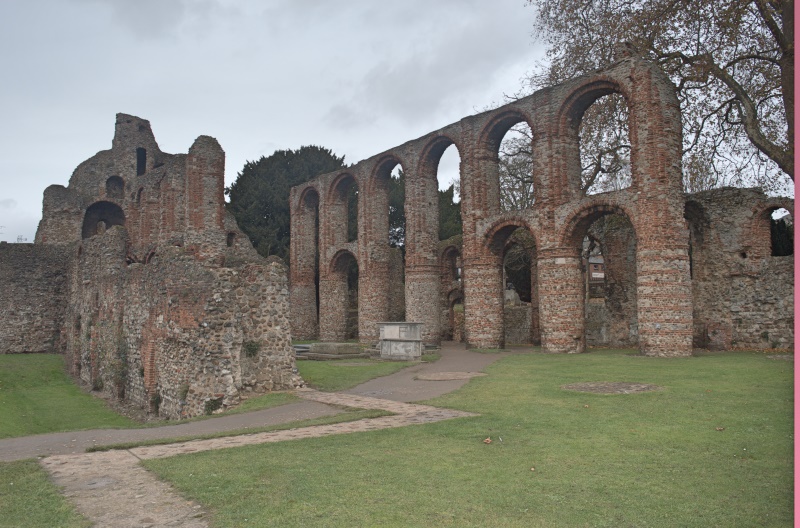
Figure 4: St Botolph’s Priory now owned by English Heritage (Picture: author’s own).
Physical evidence of the siege survives but is only partially preserved. The medieval priory of St Botolph's was practically destroyed during the siege and never rebuilt. It is now owned by English Heritage which has ensured the ruin’s preservation. The site is hard to find; it is not actively advertised or signposted. It is now enclosed and enveloped by the rest of the town, which has erected up a plaque, with the help of English Heritage including brief information explaining the damage inflicted by cannon fire in 1648. No context is given (Colchester, St. Botolph’s Priory, 2017). What is noticeable is that the siege is only briefly discussed, whilst the wider Civil War is forgotten in local memory. The siege is only talked about when considering the damage, the town received and the suffering it received because of the events of 1648. The priory shows us a clear example of how the Civil War impacted landmarks and memory around us, and how, even in the present, memory of the Civil War is not prevalent and promoted in society.
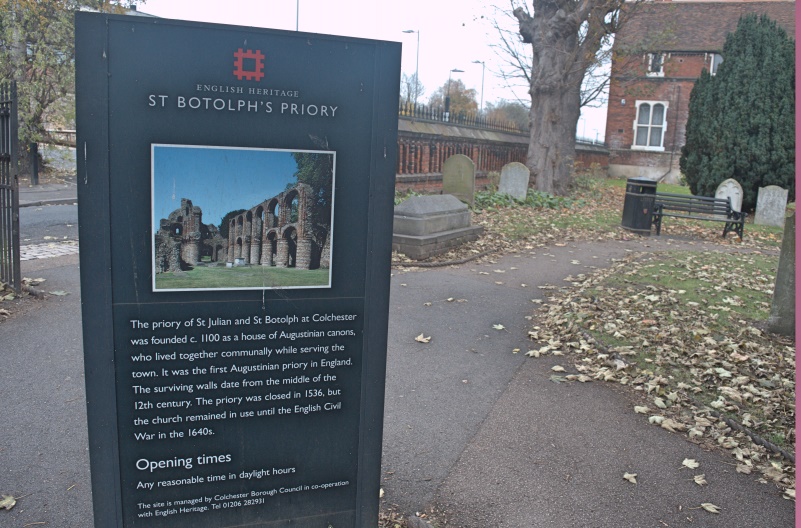
Figure 5: St Botolph’s Priory now owned by English Heritage (Picture: author’s own).
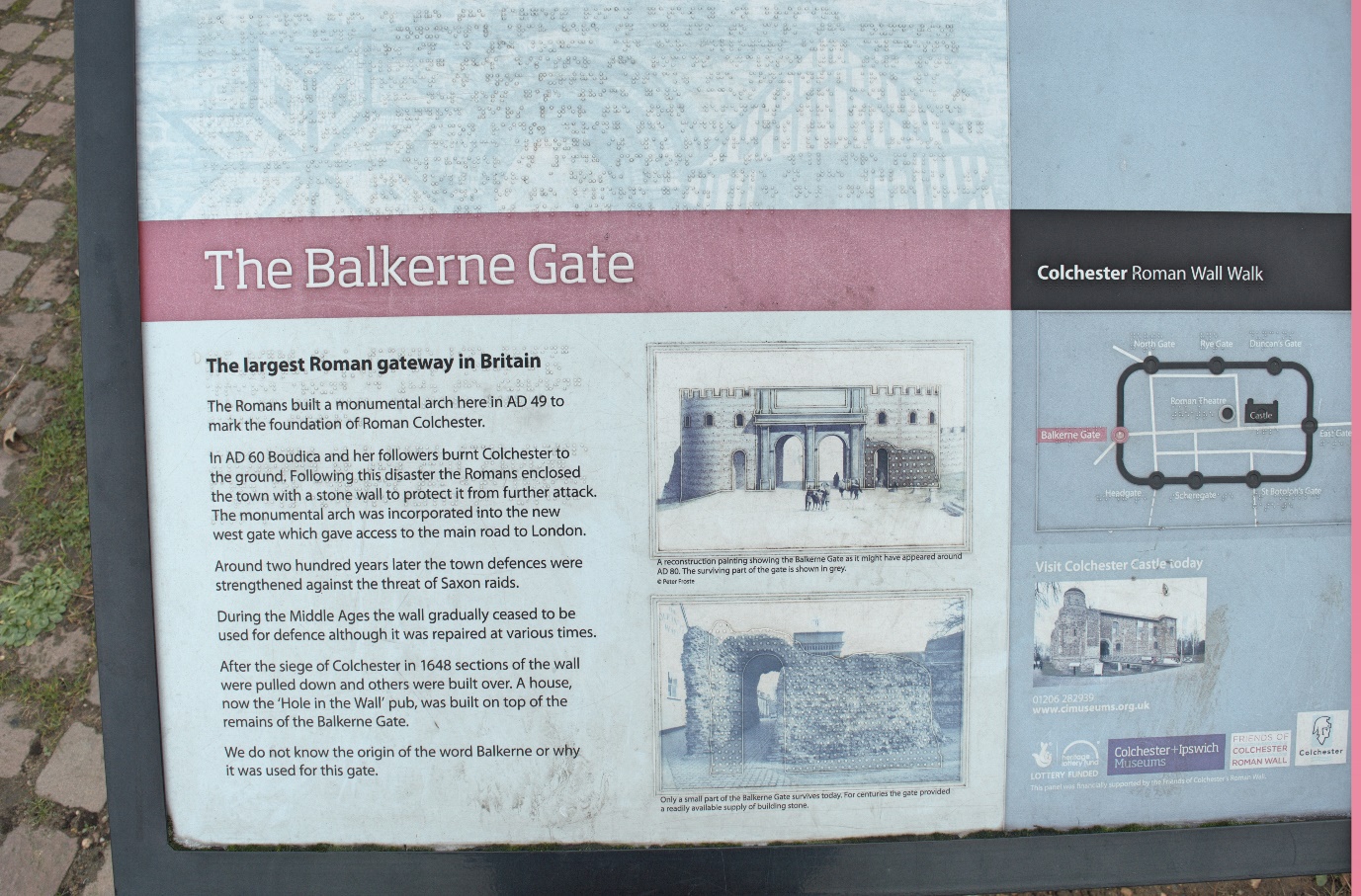
Figure 6: Information board at the Balkerne Gate (Picture: author’s own).
The Roman Wall is another landmark which bears the damage from cannon fire from the siege (Roman Wall, 2018; Visit Colchester, 2018). There are plenty of plaques around the wall which tell the reader about the wall and its history from Roman times, but information about the damage inflicted upon it during the siege only appeared in 2015 (Roman Wall, 2015). This is one of the largest engagements with the Civil War which suggests that siege memory attached itself to other landmarks, which allows it to survive to the present. The wall also shows us, that whether welcomed or not, the siege survives in local memory, even if not actively promoted, because it impacted other memories.
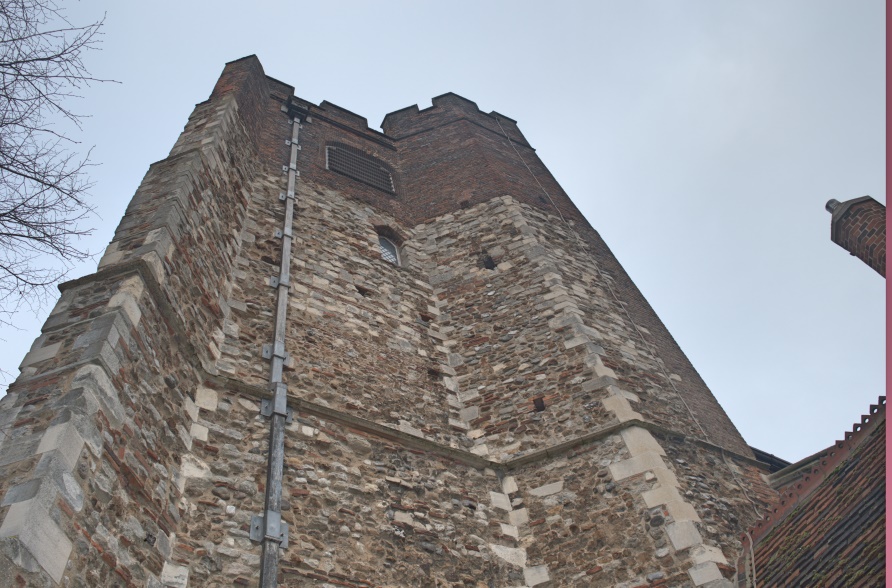
Figure 7: St Mary at the Wall. Note the different brick at the top which shows the eighteenth-century repairs (Picture: author’s own).
The memory of the damage inflicted on St Mary at the Wall Church has been better preserved. The church suffered during the conflict but was repaired in the eighteenth century (St Mary at the Wall, 2018). This might also be because the story of its damage was also preserved in popular memory, as Benham wrote in his nineteenth-century town history that the church lost its lost tower because of a man called Thompson, who only had one eye. From the tower he fired cannon shot at the Parliamentarian forces and was later targeted and killed (Benham, 1897, p.18). From Benham’s story we can not only see how popular memory survived well into the nineteenth century, but we can also see how stories attach themselves to specific landmarks, such as why the tower was destroyed. In the twentieth century, people have claimed that the church was the origin of the nursery rhyme ‘Humpty Dumpty’ (Colchester, St Mary at the Walls, 2018). There is no evidence that this is the case, yet this memory survives into the present day and this memory of Humpty Dumpty has prevailed (Colchester: Can Humpty Dumpty have a great find, 2018). It also suggests that memory and stories adapt and change over time. The eighteenth-century tower is very distinct from the rest of the church and plays are held here about the siege, making it a rare site of preservation of popular memory. What is interesting to note is that the medieval memory of the church has been overwritten by the siege.
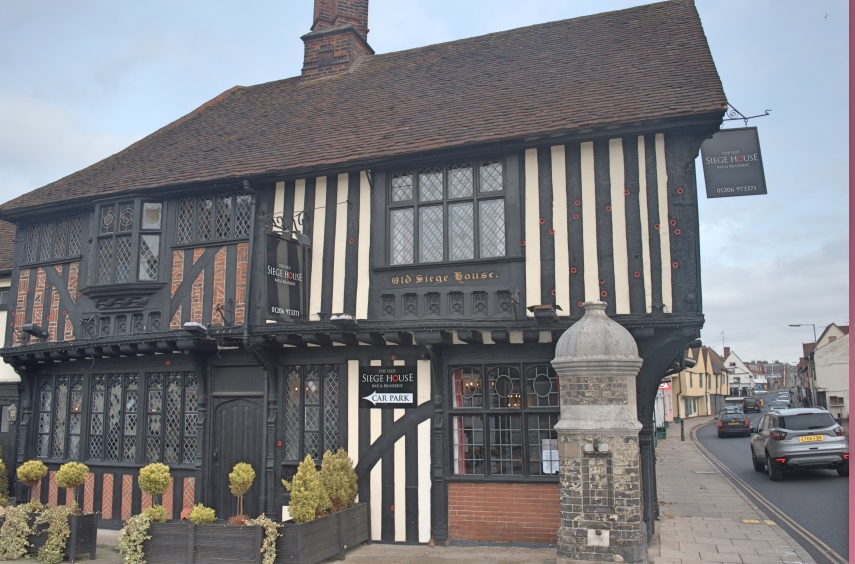
Figure 8: Siege House with the musket shot being highlighted (Picture: author’s own).
There is also the building and restaurant now called the ‘Siege House’. This name obviously keeps the siege alive in some capacity. It proudly shows us the musket damage sustained in the attack, one in which George Lisle was injured, captured, and then re-captured by the Royalists (The Old Siege House Bar and Brasserie, 2018). At the Siege House, Civil War memory is marketed with the red circles on the outside which represent musket damage actively playing on the memory that Colchester was severely damaged during the siege; the Civil Wars can be marketable in the present era. It must be noted that Siege House is a unique case, nowhere else in Colchester is the siege marketed as such, but it does provide an example of how the Civil Wars can be used and marketed to a wide local and national audience.
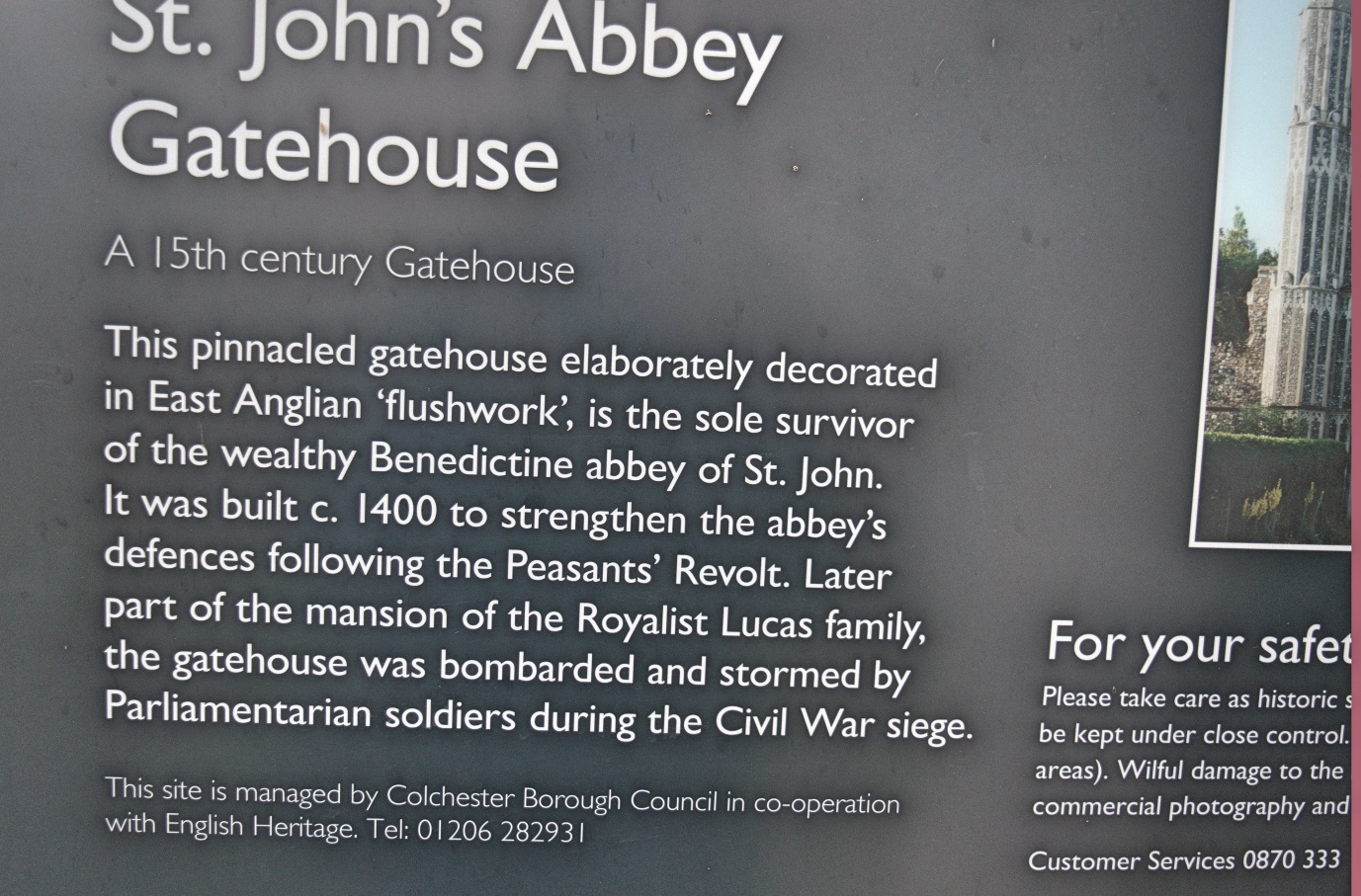
Figure 9: Information board at St. John’s Abbey Gate (Picture: author’s own).
Other sites also house Civil War memory, such as the ‘Hole in the Wall’ pub and remnants of Lucas’s Abbey and the old East Gate. All these sites, although not profound in their representation of the siege, still linger and promote a memory that is not necessarily advertised. The abbey for example, has just one building remaining, which is called the gate house. This has a small information plaque; its survival again does sustain a memory, but it is not advertised and stands there alone. The land on which the abbey stood has now been used for housing, with the road names reflecting a strong Roman perception such as Londinium Road (Personal Observation, 2017). The abbey is also separated from the main part of the town by the main road that goes around the centre of town. This separation has made accessibility even harder than before. This raises a question of modern town planning and its impact on sites of memory such as the old abbey.
But many landmarks have disappeared since the siege of 1648, mainly the old forts which Fairfax built to surround the town. These forts are mentioned by Defoe and so presumably were still visible in the eighteenth century, but fell into ruin and eventually disappeared under housing estates or main roads. These changes suggest that Colchester did not want to remember the siege, and let these landmarks corrode, leaving only what was necessary, such as the churches and buildings in the town which had a purpose.
The English Civil War was a catastrophe for the people of England and the siege was a tragedy for the town. Locally and nationally, political enmities that developed during the war continued to shape politics well into the nineteenth century and in turn the way the war was remembered by individuals and communities. Indeed, we might argue that the struggle continues between authority and liberty in our own binary politics of the twenty-first century. According to Tristram Hunt (2002, xii), Colchester typifies a national trend. He has pointed out that there is a decreasing historical memory of the English Civil War in British culture more generally and argues that it is vitally important to remember the conflict since questions that were asked then regarding republicanism, capitalism, democracy and devolved powers are still relevant today.
The history of the siege is very well recorded in print and memory of the terrible events is still visible in the physical fabric of the town, but broadly speaking Colchester seems largely indifferent to this period of its history. Perhaps the town has preferred to brush over the enmities of the past and avoid too much discussion of division in public. Hunt points out that the civil wars fought by the Americans and French have a much more prominent place in their respective historical memory and collective political culture and identity (Hunt, 2002). In other words, they have managed to construct a ‘usable past’ (Richard Cosgrove, 2008). The modern idea of a usable past reflects a desire to make sense of national experiences in ways that unify rather than separate us. The search for a usable past aims at creating a better world by incorporating achievements as well as regrets, pride as well as disappointment, into our historical accounts. This article has shown that currently the Civil Wars are not seen as ‘usable’. Yet, as Hunt argued, the conflict can be used to help answer questions in the present. In the right hands the usable past can be an expression of communal aspiration. It is hoped that this article has indicated a few of the routes by which research on the Civil War along these lines can and should proceed.
References
Aikin, John, (1788). England delineated; or, a geographical description of every county in England and Wales: with a concise account of its most important products, natural and artificial (For the Use of Young Person). London.
Benham, Charles, E, (1897). Old Colchester: A few chapters for young Colchester. Essex County Standard office.
Berquin, Arnaud, M, (1788). The Friend of youth, Translated from the French of M. Berquin: Complete in Two Volumes. London.
Britain Express, (2018). Colchester, St Mary at the Walls [online], available at: http://www.britainexpress.com/counties/essex/churches/colchester-st-mary-walls.htm, [2nd March 2018].
British Library, Maps 2390, The Siege of Colchester by the Lord Fairfax.
Buckler, George, (1876-82). Colchester Castle a Roman Building, and the oldest and noblest monument of the Romans in Britain. With illustrative plans and sketches. Benham & Harrison.
Chelmsford Chronicle, (1892), [online], available at https://www.britishnewspaperarchive.co.uk/, [4th October 2018].
Cosgrove, Richard, (2008), “A Usable Past: History and the Politics of National Identity in Late Victorian England”, ‘Journal of Parliamentary History, Vol 27 (2008), pp. 30-42.
Cutts. Edward, L, in E. Freedman and W. Hunts, ed. 1888. Colchester, Historic Towns. London.
Defoe, Daniel, (2017), Letter 1, Part 1: Through Essex to Colchester [online], available at: http://www.visionofbritain.org.uk/text/chap_page.jsp?t_id=Defoe&c_id=2 [8th November 2017].
Denney, Patrick, (2006). Round about Colchester: Exploring Local history with the East Anglian Daily Times. Wharncliffe Books.
Donagan, Barbara, (1988), “Codes and Conduct in the English Civil War.” Past & Present, No. 118, Feb., 1988, pp.66-95.
Donagan, Barbara, (2004). War in England 1642-1649. Oxford University Press.
English Heritage, (2018). Colchester, St Botolph’s Priory [online], available at: http://www.english-heritage.org.uk/visit/places/colchester-st-botolphs-priory/ [2nd March 2018].
Essex Herald (1866), “Printers’ Holiday Excursion to Colchester”, [online], available at https://www.britishnewspaperarchive.co.uk/, [4th October 2018].
Essex Record Office, D/P 203/5/1,Churchwarden Accounts 1753-1782.
Essex Record Office, 1/Mp 90/2/1/14, A 1791 drawing of St Botoloph’s ruins.
Fuller, Thomas, (1985). The History of the Worthies of England: Who for parts and learning have been eminent in the several counties. Together with an Historical Narrative of the Native Commodities and Rarities in each County. (London: 1662); Aurelian Cook., Titus Briannicus: An Essay of History Royal in the Life & Reign of his Late Sacred Majesty Charles II of ever blessed and Immortal memory. London.
Gazette News, (2018). Colchester: Can Humpty Dumpty have a great find? [online], available at: http://www.gazette-news.co.uk/news/3670300.Colchester__Can_Humpty_Dumpty_have_a_great_find_/ [29th June 2018].
Historic England, AA43/03523, All-tablet memorial to Captains Charles Lucas and George Lisle, d. 1648, on the north wall of St Giles' Church, 1943, [online] available at http://viewfinder.english-heritage.org.uk/search/reference.aspx?uid=87021&index=12&form=advanced&who=Brandt&printable=true ,date accessed 12th November 2018.
Howard, Roger, (1981), The Violent Irruption and Terrible Convulsions of the Siege during the Late Lamentable Civil War at Colchester in the Year 1648. Theatre Action Press.
Hunt, Tristam, (2002). The English Civil war: At first hand. London.
Jarvis, Stan, M, (1971). Discovering Essex. Shire Publications.
Jarvis, Stan, M, (1984). Essex Pride. Ian henry Publications.
Jarvis, Stan, M, (1991). Essex Headlines. Countryside Books.
Jones, Phil, (2003). The Siege of Colchester, 1648. Stroud.
Lloyd, David, (1766). State-worthies; or the Statesmen and Favourites of England from the Reformation to the Revolution: Their Prudence and Policies, Successes and Miscarriages, Advancements and Falls: Vol II. London.
Martin, Geoffrey, H, (1959). A Guide to Colchester. Benham Newspapers Limited.
Morant. Philip, (1748). The History and Antiquities of the most ancient Town and Borough of Colchester, in the county of Essex, in three books. Collected chiefly from Manuscripts. With an Appendix of Records and Original Papers. Adorned and Illustrated with Sculptures. Colchester.
Phillips, Andrew, (2004). Colchester: A History. Phillimore.
Roman Wall, (2015). Civic Society’s East Gate board unveiled [Online], available at: http://www.romanwall.org/, [2nd March 2018].
Round, John, H, (1894). “The Case of Lucas and Lisle”, Transactions of the Royal Historical Society, New Series, Vol. 8 (1894), pp. 157-180.
St James Gazette, (1882), [online], available at https://www.britishnewspaperarchive.co.uk/, [4th October 2018]
St Mary at the walls (2018), Timeline [online] available at, https://stmaryatthewalls.wordpress.com/timeline/. {2nd March 2018].
St. Peters, (2018). Memorials Part III [online], available at: https://www.stpeterscol.org.uk/mems3.html, [6th May 2018).
Sweet, Rosemary, (1997). The Writing of Urban Histories in Eighteenth-Century England. Clarendon Press.
The Colchester Archaeologist, (2018), The Siege of Colchester 1648 [Online], available at https://www.thecolchesterarchaeologist.co.uk/?page_id=879, [7th November 2018].
THE ROYAL ARCHÆOLOGICAL INSTITUTE, (2017). Morning Post [London, England] 9 Aug. 1876: 3. Available at British Library Newspapers. [Web. 26 Oct. 2017].
Visit Colchester, (2018). Roman Colchester [online], available at: https://www.visitcolchester.com/explore/historic-colchester/roman-colchester.aspx, [2nd March 2018].
Visit Colchester, (2018). The Old Siege House Bar and Brasserie [online], available at: https://www.visitcolchester.com/Colchester-The-Old-Siege-House-Bar-and-Brasserie/details/?dms=3&venue=0772230, [2nd March 2018].
Visit Colchester, (2018). Visit Colchester [online], available at: https://www.visitcolchester.com/, [3rd March 2018].
Wood, Andy, (2013). The Memory of the People: Custom and Popular Senses of the Past in Early Modern England. Cambridge University Press.
Copyright Statement
© Michael Sewell. This article is licensed under a Creative Commons Attribution 4.0 International Licence (CC BY).